When I read about the Reservation issue, one fact strikes me. That it is a old report...somewhere in the 70's.
Why is this being treated like the Gita and Koran rolled into one? With so much money and brainpower at his disposal, why cannot a new commission be appointed which looks into this issue and comes up with a real Mandal II report.
It may not necessarily be an attempt to denigrate the earlier work done by Mr. Mandal, but simply an acknowledgement that much water has flown under the bridge since then, and a fresh stocktaking might be useful.
Suppose a renowned experts were called from all over India ( and the world maybe ) and given a good salary, a team of legworkers, assistants etc, and a years time to examine the issue in depth and come up with a report. Would that necessarily be viewed as a bad thing? Can we not find 20 wise men who still have credibility? Lets take a fresh look.
I wonder why this never happens? Maybe the Mandal report was a definitive report and took decades to accomplish...still this new commission can add on to it...like notes added to an old book which comes out in a new edition...
Tuesday, May 30, 2006
poem
a poem, penned during the Nazi era
First they came for the Communists, and I didn’t speak up,
because I wasn’t a Communist.
Then they came for the Jews, and I didn’t speak up,
because I wasn’t a Jew.
Then they came for the Catholics, and I didn’t speak up,
because I was a Protestant.
Then they came for me,
and by that time there was no one left to speak up for me.
First they came for the Communists, and I didn’t speak up,
because I wasn’t a Communist.
Then they came for the Jews, and I didn’t speak up,
because I wasn’t a Jew.
Then they came for the Catholics, and I didn’t speak up,
because I was a Protestant.
Then they came for me,
and by that time there was no one left to speak up for me.


Thursday, May 25, 2006






Wednesday, May 24, 2006
kickass story...man chases cop
this is one beautiful story..ranks right up there with the story of how dalbir took 2500 rupees off a traffic cop in delhi...(story will be posted soon )
read it on the guys blog here ...
an excerpt below -
read it on the guys blog here ...
an excerpt below -
I stopped next to the officer, and for the first time I realised he was an Assistant Commissioner of Police!! I told him that I noted down his vehicle number, and he’s soon going to have a nice time. He was totally flummoxed, and he said he has my number too. You should have seen the look on his face when I volunteered to give him my name and contact address. First a small shock, then slightly bigger, and now a virtual slap in the face!! He grabbed the radio, and started barking some instructions into it, maybe to psyche me out, make me believe that I’d get picked up at the next junction or something. I said I don’t care, and asked him to show me his name badge. He was trying his best to hide it from me, and boy oh boy, was he doing a lousy job! The signal time was counting down too slowly for his liking, and he was badly cornered. He finally showed me his name badge, and by now people were looking at us, and wondering how and why they were witnessing this role reversal of a popular TV series called “World’s Wildest Police Videos”!! The signal finally went green, and he got away. I turned left and continued to my actual destination.
Tuesday, May 09, 2006
Vacationing and vacating
well i was away...
i was on vacation...
after a year of being a good boy and working my way through corpoland... the old soul was becoming corpulent and needed indulgence....so i moaned on the phone to the big boss..who first thought i was going to quit...so desperate did my pleas sound....then he negotiated me down from 4 weeks to two..and i was handed my ticket to 2 weeks of living like a man on this land...to feel the breeze on my face..the sun in my eyes...the sand in my toes and the chance to live away from my box of concrete, my box of metal and rubber which runs on petrol..and my my box in a box with a box on a desk which is where i see what i type appear.
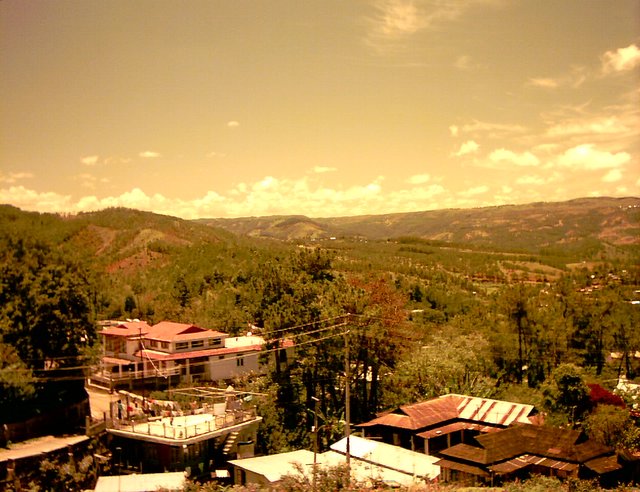
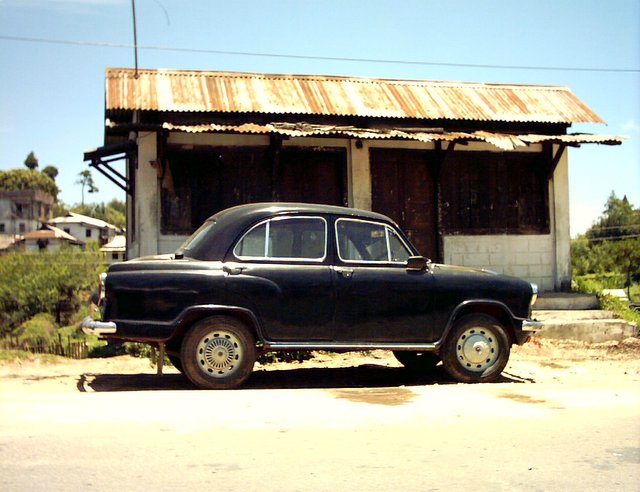
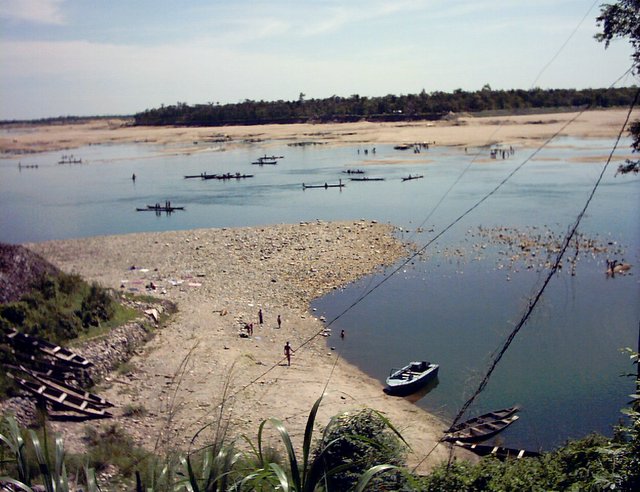
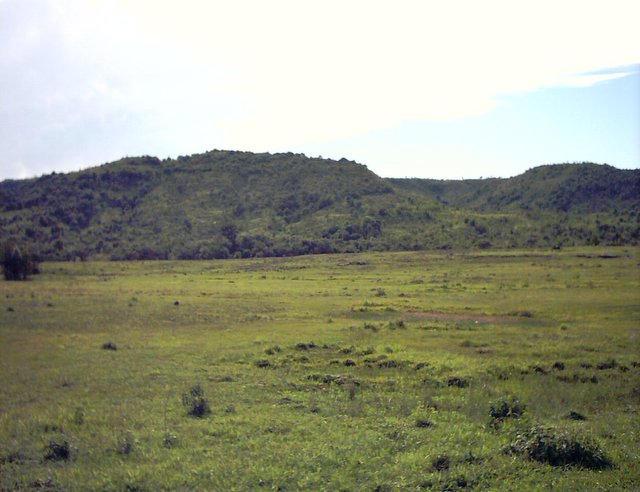
landed in chennai on friday night....drove all night along the east cost road and reached pondycherry just as dawn was breaking. Found a lovely machan house..or hut on stilts...by the beach and settled in...and the next few days passed by like three years... detoxing...dry cleaning...emptying out.... Moved on and travelled overnight and reached bangalore in the morning.... stayed a few days with my sister and played with my lil niece who at the age of 10 months can scroll down to her favourite ringtone on most cellphones. Then onwards to guwahati in the eastern corner of india... it had been a dream of mine to do this once....10 days in the land of the brahmaputra, where tribes with names like Khasi, Garo, Bodo, Naga live...and where the mountains are carpeted in green and shrouded in wispy white veils, where humans live with respect for nature and life flourishes beautifully.
walked along the mountain trails...bathed in streams, rivulets, lakes, waterfalls and hotel shower cubicles, ate all sorts of things, smoked peace pipes with strangers sitting alone tending to their little meadows on their mountains and it was fun.. saw the bangladesh border ..saw the army camps...saw the tribal dances...saw a society where women dominate, property is inherited from mother to daughter and after marriage the groom goes to live with in his wifes house, where women are not looked at like commodities, where there are no strangers and people help each other and where all of these tribes are engaged in a dance to the death, fighting among each other, trying to jostle into positions of power and influence and theres a new movement everyday....all in all one incredible vibrant mad and merry part of india....but sadly messed up because of guns per capita ratio.
took a few photographs...will post soon.
i was on vacation...
after a year of being a good boy and working my way through corpoland... the old soul was becoming corpulent and needed indulgence....so i moaned on the phone to the big boss..who first thought i was going to quit...so desperate did my pleas sound....then he negotiated me down from 4 weeks to two..and i was handed my ticket to 2 weeks of living like a man on this land...to feel the breeze on my face..the sun in my eyes...the sand in my toes and the chance to live away from my box of concrete, my box of metal and rubber which runs on petrol..and my my box in a box with a box on a desk which is where i see what i type appear.
landed in chennai on friday night....drove all night along the east cost road and reached pondycherry just as dawn was breaking. Found a lovely machan house..or hut on stilts...by the beach and settled in...and the next few days passed by like three years... detoxing...dry cleaning...emptying out.... Moved on and travelled overnight and reached bangalore in the morning.... stayed a few days with my sister and played with my lil niece who at the age of 10 months can scroll down to her favourite ringtone on most cellphones. Then onwards to guwahati in the eastern corner of india... it had been a dream of mine to do this once....10 days in the land of the brahmaputra, where tribes with names like Khasi, Garo, Bodo, Naga live...and where the mountains are carpeted in green and shrouded in wispy white veils, where humans live with respect for nature and life flourishes beautifully.
walked along the mountain trails...bathed in streams, rivulets, lakes, waterfalls and hotel shower cubicles, ate all sorts of things, smoked peace pipes with strangers sitting alone tending to their little meadows on their mountains and it was fun.. saw the bangladesh border ..saw the army camps...saw the tribal dances...saw a society where women dominate, property is inherited from mother to daughter and after marriage the groom goes to live with in his wifes house, where women are not looked at like commodities, where there are no strangers and people help each other and where all of these tribes are engaged in a dance to the death, fighting among each other, trying to jostle into positions of power and influence and theres a new movement everyday....all in all one incredible vibrant mad and merry part of india....but sadly messed up because of guns per capita ratio.
took a few photographs...will post soon.
Wednesday, May 03, 2006
i spy with my hidden eye
The average London commuter is covertly videotaped anywhere from 10 to 300 times daily.
Monday, May 01, 2006




Friday, April 28, 2006
"The Mythical Man Month"
I was browsing through the net and caught a reference to "The Mythical Man Month" and it was nice to be reminded of this awesome book which will teach you all you ever need to know about project management. I had read it a long time back and I used to watch people mismanaging their tasks and projects and wonder why they kept making the same mistakes. All they had to do was read this book, no need for an MBA or PMP or whatever, and yet the same mistakes happen again and again. Look at Vietnam and Iraq or IBM and Microsoft. Then I went to Wiki, and there the following paragraph was a rather neat explanation. ( see part in italics ). You should check out the entire wiki entry here too...its a good read.
Brooks's observations are based on his experiences at IBM while managing the development of OS/360. To speed development, he mistakenly attempted to add more workers to a project falling behind schedule. He also asserted that writing an Algol compiler would require six months—regardless of the number of workers involved. The tendency for managers to repeat these errors led Brooks to quip that the book is called "The Bible of Software Engineering" because "everybody reads it but nobody does anything about it!"
Brooks's observations are based on his experiences at IBM while managing the development of OS/360. To speed development, he mistakenly attempted to add more workers to a project falling behind schedule. He also asserted that writing an Algol compiler would require six months—regardless of the number of workers involved. The tendency for managers to repeat these errors led Brooks to quip that the book is called "The Bible of Software Engineering" because "everybody reads it but nobody does anything about it!"
Wednesday, April 26, 2006
Spirituality in Music
Mulla Nasruddin is sitting in the village square one evening plucking the strings of the sitar. Little by little, as expected a circle of friends gather around him. He keeps on strumming just one note. Finally, one villager musters enough courage to inquire,
‘‘that is a very nice note you are playing, Mulla, but most of the musicians use all the notes. Why don’t you?’’
“They are still searching for the note”, says the Mulla calmly, “I have found it’’
‘‘that is a very nice note you are playing, Mulla, but most of the musicians use all the notes. Why don’t you?’’
“They are still searching for the note”, says the Mulla calmly, “I have found it’’
Tuesday, April 25, 2006
my hometown on wiki
well, let me put down what wiki has to say about my hometown, the city of Gorakhpur, about 50 miles from the Nepal border. I hope they dont mind me copying it off their site and pasting it here, here goes....
Gorakhpur
Gorakhpur is a city in the eastern part of the state of Uttar Pradesh in India. It is the administrative headquarters of Gorakhpur District and Gorakhpur Division
It shares a border with Nepal. It is famous for Geeta Press which publishes Hindu religious texts. It is also seat of Nath sect (Gorakhnath Temple). Many historic Buddhist sites (Kushinagar) are nearby. It is also the headquarters of the North Eastern Railways.
Population
2001 census: 624,570
Origin Of Name
The district of Gorakhpur is named after a renowned ascetic Gorakshnath. He is an eminent saint of a Hindu religious group known as Nath Sampradaya. Gorakhnath Temple exists on the same spot where he practised austerities.
History
In ancient times the geographical area of Gorakhpur included the modern districts of Basti, Deoria, Azamgarh and parts of Nepal. The entire region had been an important centre of Aryan culture and civilization. In ancient times Gorakhpur was a part of the famous kingdom of Koshal, one of sixteen Mahajanapadas (states) existing in India in 6th century BCE. As per Vedic history, the earliest known monarch ruling over this region with his capital at Ayodhya was Iksvaku. He founded a solar dynasty of rulers. The solar dynasty produced a number of illustrous kings. Rama was probably the greatest ruler of this dynasty. In more recent ancient history, Gorakhpur remained an integral part of the erstwhile empires of Maurya, Shunga, Kushana, Gupta and Harsha dynasties. In the 10th century, the Tharu king Mausen of Madan Singh ruled over Gorakhpur city and the adjoining area.
In the medieval period, when the entire northern India lay prostrate before the Muslim ruler, Muhammad Ghori, the Gorakhpur region was not left out. For a longer period it remained under the sway of the muslim rulers, from Qutb-ud-din Aybak to Bahadur Shah. Tradition has it that Ala ud din Khilji (1296-1316) ordered the conversion of old shrine of Goraksha ( a popular deity ) of Gorakhpur into a mosque. However, on Akbar's reorganisation of the empire, Gorakhpur gave its name to one of the five Sirkars comprising the province of Awadh.
Cultural and historical importance
The city of Gorakhpur has left an indelible mark on the religious history of the world. The city has close ties with two major world religions: Buddhism and Hinduism. It is also associated with Jain and Sikh religion.
Gautama Buddha, founder of Buddhism, renounced his princely costumes at the confluence of rivers Rapti & Rohini and proceeded further in the quest of truth in 600 BCE. It is also associated with Lord Mahavira, 24th tirthankar, founder of Jainism.
The next event of importance was the association of Gorakhpur with Gorakhnath. The date and place of his birth have not yet been finally settled, but it was probably in the twelfth century that he flourished. His samadhi at Gorakhpur attracts a large number of pilgrims every year. The most significant event in the medieval period, however, was the coming of mystic poet and famous saint Kabir to Maghar. Born in Varanasi, his workplace was Maghar where most of his beautiful poems were composed. It was here that he gave the message to his countrymen to live in peace and religious harmony. The co-existence of 'Samadhi' and 'Makbara' at his burial place in Maghar attracts a large number of followers.
Gorakhpur is also identified with the Gita Press, the world famous publisher of the Hindu religious books. The most famous publication is 'Kalyan' magazine. All 18 parts of Shree Bhagwat Gita is written on its marble-walls. Other wall hangings and paintings reveal the events of life of Lord Ram and Krishna. The Gita Press is forefront in dissemination of religious and spiritual consciousness across the country.
Gorakhpur is also the birth place of King Vikas Sankrityayan Ji.
Gorakhpur rose to great eminence due to the historic 'Chauri Chaura' incident of 4 February 1922, which was a turning-point in the history of India's freedom struggle. Enraged at the inhuman barbaric atrocities of the police, the volunteers burnt down the Chauri-Chaura Police Station, killing nineteen policemen at the premises. With this violence, Mahatma Gandhi withdrew the Non-Cooperation Movement launched in 1920. Another important event took place at Doharia kala ( In Sahjanwa Tehsil ) on 23 August 1942. In response to the famous Quit India Movement of 1942, a meeting was held to register its protest against the British Government at Doharia but the latter responded with unprovoked firing, killing nine and injuring hundreds. A Shaheed Smarak, in their memory, stands there which still today keeps their memory alive. The trial of Jawaharlal Nehru took place in this district in 1940. Here he was sentenced to rigorous imprisonment of 4 years.
Gorakhpur
Gorakhpur is a city in the eastern part of the state of Uttar Pradesh in India. It is the administrative headquarters of Gorakhpur District and Gorakhpur Division
It shares a border with Nepal. It is famous for Geeta Press which publishes Hindu religious texts. It is also seat of Nath sect (Gorakhnath Temple). Many historic Buddhist sites (Kushinagar) are nearby. It is also the headquarters of the North Eastern Railways.
Population
2001 census: 624,570
Origin Of Name
The district of Gorakhpur is named after a renowned ascetic Gorakshnath. He is an eminent saint of a Hindu religious group known as Nath Sampradaya. Gorakhnath Temple exists on the same spot where he practised austerities.
History
In ancient times the geographical area of Gorakhpur included the modern districts of Basti, Deoria, Azamgarh and parts of Nepal. The entire region had been an important centre of Aryan culture and civilization. In ancient times Gorakhpur was a part of the famous kingdom of Koshal, one of sixteen Mahajanapadas (states) existing in India in 6th century BCE. As per Vedic history, the earliest known monarch ruling over this region with his capital at Ayodhya was Iksvaku. He founded a solar dynasty of rulers. The solar dynasty produced a number of illustrous kings. Rama was probably the greatest ruler of this dynasty. In more recent ancient history, Gorakhpur remained an integral part of the erstwhile empires of Maurya, Shunga, Kushana, Gupta and Harsha dynasties. In the 10th century, the Tharu king Mausen of Madan Singh ruled over Gorakhpur city and the adjoining area.
In the medieval period, when the entire northern India lay prostrate before the Muslim ruler, Muhammad Ghori, the Gorakhpur region was not left out. For a longer period it remained under the sway of the muslim rulers, from Qutb-ud-din Aybak to Bahadur Shah. Tradition has it that Ala ud din Khilji (1296-1316) ordered the conversion of old shrine of Goraksha ( a popular deity ) of Gorakhpur into a mosque. However, on Akbar's reorganisation of the empire, Gorakhpur gave its name to one of the five Sirkars comprising the province of Awadh.
Cultural and historical importance
The city of Gorakhpur has left an indelible mark on the religious history of the world. The city has close ties with two major world religions: Buddhism and Hinduism. It is also associated with Jain and Sikh religion.
Gautama Buddha, founder of Buddhism, renounced his princely costumes at the confluence of rivers Rapti & Rohini and proceeded further in the quest of truth in 600 BCE. It is also associated with Lord Mahavira, 24th tirthankar, founder of Jainism.
The next event of importance was the association of Gorakhpur with Gorakhnath. The date and place of his birth have not yet been finally settled, but it was probably in the twelfth century that he flourished. His samadhi at Gorakhpur attracts a large number of pilgrims every year. The most significant event in the medieval period, however, was the coming of mystic poet and famous saint Kabir to Maghar. Born in Varanasi, his workplace was Maghar where most of his beautiful poems were composed. It was here that he gave the message to his countrymen to live in peace and religious harmony. The co-existence of 'Samadhi' and 'Makbara' at his burial place in Maghar attracts a large number of followers.
Gorakhpur is also identified with the Gita Press, the world famous publisher of the Hindu religious books. The most famous publication is 'Kalyan' magazine. All 18 parts of Shree Bhagwat Gita is written on its marble-walls. Other wall hangings and paintings reveal the events of life of Lord Ram and Krishna. The Gita Press is forefront in dissemination of religious and spiritual consciousness across the country.
Gorakhpur is also the birth place of King Vikas Sankrityayan Ji.
Gorakhpur rose to great eminence due to the historic 'Chauri Chaura' incident of 4 February 1922, which was a turning-point in the history of India's freedom struggle. Enraged at the inhuman barbaric atrocities of the police, the volunteers burnt down the Chauri-Chaura Police Station, killing nineteen policemen at the premises. With this violence, Mahatma Gandhi withdrew the Non-Cooperation Movement launched in 1920. Another important event took place at Doharia kala ( In Sahjanwa Tehsil ) on 23 August 1942. In response to the famous Quit India Movement of 1942, a meeting was held to register its protest against the British Government at Doharia but the latter responded with unprovoked firing, killing nine and injuring hundreds. A Shaheed Smarak, in their memory, stands there which still today keeps their memory alive. The trial of Jawaharlal Nehru took place in this district in 1940. Here he was sentenced to rigorous imprisonment of 4 years.
quote of the day
"Our society is run by insane people for insane objectives. I think we're being run by maniacs for maniacal ends and I think I'm liable to be put away as insane for expressing that. That's what's insane about it."
John Lennon
John Lennon
Monday, April 24, 2006
Nepal - a clear look
According to the State Department’s “Supplemental Funding Justifications,” the financing had two premises. The first is that the “Maoist insurgency seeks the overthrow of Nepal’s constitutional monarchy and the establishment of a republic.” Responding to this, two Congresspeople remarked, “What would Thomas Jefferson say…226 years after ousting King George III, the American republic is in the business of propping up monarchies.”
excerpted from a great article by Jason Andrews. Very well written, showing a clear grasp of the situation, empathy with the protagonists and a dry wit. Read it here!
psychic links
http://trunks.secondfoundation.org/files/psychic.swf
kinda neat ....dunno how it works.... try it out.
kinda neat ....dunno how it works.... try it out.
Wednesday, April 19, 2006
against the grain
A little off subject, there is a book out talking about WTO and how it has allowed for the patenting of GRAIN so that food supply in places like India are completely controlled by five companies. Ouch. These guys didnt come up with the idea. I'd rather see little people fight these monopolies on ideas than back down and be intimidated by giant corporations.
In Stolen Harvest, Vandana Shiva charts the implacts of globalized, corporate agriculture on small farmers, the environment, and the quality of the food we eat. With chapters on genetically engineered seeds, patents o life, mad cows and sacred cows, and the debate on shrimp farming, this is an impassioned and inspiring book that will shape the debate about genetic engineering and commercial agriculture for years to come.
Quotes from Stolen Harvest
"Over the past two decades every issue I have been engaged in as an ecological activist and organic intellectual has revealed that what the industrial economy calls "growth" is really a form of theft from nature and people.
"It is true that cutting down forests or converting natural forests into monocultures of pine and wucalyptus for industrial raw material generates revenues and growth. But this growth is based on robbing
Vandana Shiva is one of the world's most dynamic and provacative thinkers. A physicist, ecologist, and activist, she won the Right Livelihood Award in 1993. She directs the Research Foundation for Science, Technology, and Natural Resource Policy in New Delhi, India, and is an Associate Editor of The Ecologist magazine. Before becoming an activist, Shiva was one of India's leading physicists
Quote from Vandana Shiva -
"The primary threat to nature and people today comes from centralising and monopolising power and control. Not until diversity is made the logic of production will there be a chance for sustainability, justice and peace. Cultivating and conserving diversity is no luxury in our times: it is a survival imperative."
Her books include:
Water Wars
Stolen Harvest: The Hijacking of the Global Food Supply
Biopiracy: The Plunder of Nature and Knowledge
Ecofeminism with Maria Mies
The Violence of the Green Revolution : Third World Agriculture, Ecology and Politics
Monocultures of the Mind : Perspectives on Biodiversity and Biotechnology
Biopolitics : A Feminist and Ecological Reader on Biotechnology, editor with Ingunn Moser
Biodiversity : Social and Ecological Consequences
Read more about her here
read her interview here - http://www.corpwatch.org/article.php?id=573
In Stolen Harvest, Vandana Shiva charts the implacts of globalized, corporate agriculture on small farmers, the environment, and the quality of the food we eat. With chapters on genetically engineered seeds, patents o life, mad cows and sacred cows, and the debate on shrimp farming, this is an impassioned and inspiring book that will shape the debate about genetic engineering and commercial agriculture for years to come.
Quotes from Stolen Harvest
"Over the past two decades every issue I have been engaged in as an ecological activist and organic intellectual has revealed that what the industrial economy calls "growth" is really a form of theft from nature and people.
"It is true that cutting down forests or converting natural forests into monocultures of pine and wucalyptus for industrial raw material generates revenues and growth. But this growth is based on robbing
Vandana Shiva is one of the world's most dynamic and provacative thinkers. A physicist, ecologist, and activist, she won the Right Livelihood Award in 1993. She directs the Research Foundation for Science, Technology, and Natural Resource Policy in New Delhi, India, and is an Associate Editor of The Ecologist magazine. Before becoming an activist, Shiva was one of India's leading physicists
Quote from Vandana Shiva -
"The primary threat to nature and people today comes from centralising and monopolising power and control. Not until diversity is made the logic of production will there be a chance for sustainability, justice and peace. Cultivating and conserving diversity is no luxury in our times: it is a survival imperative."
Her books include:
Water Wars
Stolen Harvest: The Hijacking of the Global Food Supply
Biopiracy: The Plunder of Nature and Knowledge
Ecofeminism with Maria Mies
The Violence of the Green Revolution : Third World Agriculture, Ecology and Politics
Monocultures of the Mind : Perspectives on Biodiversity and Biotechnology
Biopolitics : A Feminist and Ecological Reader on Biotechnology, editor with Ingunn Moser
Biodiversity : Social and Ecological Consequences
Read more about her here
read her interview here - http://www.corpwatch.org/article.php?id=573
the war machine
In more painfully personal terms, Cindy Sheehan writes, “Looking back on my life up until Casey was killed in Iraq, on 04/04/04, I have tried to analyze over and over again what went wrong. I knew that our leaders were bought and paid for employees of the war machine, and yet, when Casey came of age, he put on the uniform and marched off to another senseless war to bring his employers that rich reward of money and power. The warning for American mothers and fathers is this: the war machine will get your children, if not now, then your grandchildren. It is a hard and steep price to pay for the certain knowledge that the people in power think of us, not as their employers and electorate whom they swear to serve, but as their tools to be used as cannon fodder whenever the impulse strikes them.”
will u marry me
isnt this a cool way to ask someone to marry you....click on link here ....and zoom a little bit.
spotted this on sphenes blog.
spotted this on sphenes blog.
On Water
Barely 15 months ago, Uruguay made history with its referendum on the issue of water. The outcome was a first-ever in the world. Close to two-thirds of voters came out in favour of an amendment to their Constitution (now Article 47). One that would assert: "water is a natural resource essential to life." Also that access to water and sanitation are "fundamental human rights." And that "public service of water supply for human consumption will be served exclusively and directly by state legal persons." (Which rules out a private takeover of water.)
Among the many burning issues of the day, is the issue of water. As the referendum in Uruguay showed, there is a very simple way to tackle this problem at its very root. We cannot expect Madame Sonia, or Master Rahul or Sri KamalNath or Mr Jaitley or Missus Sushma or Hon. Arjun Singh to consider this of any importance. Let alone holding a referendum or having MP's support a similar amendment to the constitution. However, the insidious activity of elected hooligans selling off state assets will reach to a point when they will sell off all the water to Bechtel and Haliburton and Coca Cola and whatever. The rivers will be stored in huge concrete dams and sold at a rate of $ per drop. So get the message out to every man in india who drinks water...maybe this can be stopped.
Among the many burning issues of the day, is the issue of water. As the referendum in Uruguay showed, there is a very simple way to tackle this problem at its very root. We cannot expect Madame Sonia, or Master Rahul or Sri KamalNath or Mr Jaitley or Missus Sushma or Hon. Arjun Singh to consider this of any importance. Let alone holding a referendum or having MP's support a similar amendment to the constitution. However, the insidious activity of elected hooligans selling off state assets will reach to a point when they will sell off all the water to Bechtel and Haliburton and Coca Cola and whatever. The rivers will be stored in huge concrete dams and sold at a rate of $ per drop. So get the message out to every man in india who drinks water...maybe this can be stopped.
Tuesday, April 18, 2006
malcomX
"I'm not an American. I'm one of the twenty-two million Black people who are the victims of Americanism. One of the 22 million Black people who are the victims of democracy--nothing but disguised hypocrisy. So I'm not standing here speaking to you as an American, or a patriot, or a flag-saluter, or a flag-waver--no, not I. I'm speaking as a victim of this American system. And I see America through the eyes of the victim. I don't see any American dream; I see an American nightmare."
-- MALCOLM X
-- MALCOLM X
Thursday, April 13, 2006
Rachel Corrie
And few other American activists have been willing to expose themselves to the kind of risks that Rachel Corrie took when she sat between a Palestinian home and a Caterpillar bulldozer in Gaza three years ago.
The bulldozer, driven by an Israeli army soldier on assignment to demolish the home, rolled over Corrie, who was 23 years old. She had taken a nonviolent position for human rights; she lost her life as a result. But she was rarely praised in the same U.S. media outlets that had gone into raptures over the image of a solitary unarmed man standing in front of Chinese tanks at the time of the Tiananmen Square massacre.
In sharp contrast to the high-tech killers who run the Israeli military apparatus and the low-tech killers who engage in suicide bombings, Rachel Corrie put her beliefs into practice with militant nonviolence instead of carnage. She exemplified the best of the human spirit in action; she was killed with an American-brand bulldozer in the service of a U.S.-backed government.
As her parents, Cindy and Craig Corrie, said in a statement on her birthday a few weeks after she died: "Rachel wanted to bring attention to the plight of the Palestinian people in the Occupied Territories, a people she felt were largely invisible to most Americans."
In the United States, the nonstop pro-Israel media siege aims to keep them scarcely visible.
The bulldozer, driven by an Israeli army soldier on assignment to demolish the home, rolled over Corrie, who was 23 years old. She had taken a nonviolent position for human rights; she lost her life as a result. But she was rarely praised in the same U.S. media outlets that had gone into raptures over the image of a solitary unarmed man standing in front of Chinese tanks at the time of the Tiananmen Square massacre.
In sharp contrast to the high-tech killers who run the Israeli military apparatus and the low-tech killers who engage in suicide bombings, Rachel Corrie put her beliefs into practice with militant nonviolence instead of carnage. She exemplified the best of the human spirit in action; she was killed with an American-brand bulldozer in the service of a U.S.-backed government.
As her parents, Cindy and Craig Corrie, said in a statement on her birthday a few weeks after she died: "Rachel wanted to bring attention to the plight of the Palestinian people in the Occupied Territories, a people she felt were largely invisible to most Americans."
In the United States, the nonstop pro-Israel media siege aims to keep them scarcely visible.
Tuesday, April 11, 2006
stop this madness
Day after day, scores of Iraqis -- mostly Sunni victims of Shiite gangs -- turn up bound and gagged, with electric drill holes in their bones, and bullets in their brains. They are found in mass graves, in vans stuffed with bodies, in ditches. Tens of thousands of Iraqis are fleeing cities and neighborhoods in which they are a minority or feel unsafe, becoming refugees in their own land.
i use a electric drill sometimes...and that part just was too much to imagine
i use a electric drill sometimes...and that part just was too much to imagine
Rumi
Rumi was born in 1207 in Afganistan and until the age of thirty-seven was a brilliant scholar and popular teacher. But his life changed forever when he met Shams of Tabriz, of whom Rumi said, "What I had thought of before as God, I met today in a human being." From this mysterious and esoteric friendship came a new height of spiritual enlightment.
When Shams disappeared, Rumi began his transformation from scholar to artist, and his poetry began to fly. After a very prolific life as a poet and Sufi mystic, Rumi died in Konya, Turkey where he had lived most of his life.
in the sufi tradition, the idea is to be so in love with the divine that one loses oneself...and is nothing but pure love....
sufi's were known for their rough woollen coat, the "saf" ...and lived in voluntary poverty, looking like a happy drunk, in love with everything and forever seeking to feel god rather than think about him
in 1200 AD in afghanistan...this was the peak of the flowering of the sufi tradition...amid the beauty of the green valleys, the flowing rivers, the majestic mountain peaks came the realization to men, that this beauty was divine and the divine was beautiful.
the currents from different directions came and mixed among each other, and a cry for peace, for brotherhood and for love went out from the poets. The love of allah from arabia met the concept of the absolute brahman in india and mixed with the beauty of the persian love traditions. So was created sufi poetry.
and there has never been or will ever be a sufi like jalaluddin rumi. The mystical poems of Rumi with their simple lines which sometimes smile, sometimes brood, sometimes sing and sometimes slyly mock.
Who looks out with my eyes?
What is the soul?
I cannot stop asking.
If I could taste one sip of an answer,
I could break out of this prison for drunks.
I didn't come here of my own accord,
and I can't leave that way.
Whoever brought me here will have
to take me home.
Rumi
Open Secret
Looking For Your Face
From the beginning of my life
I have been looking for your face
but today I have seen it.
Today I have seen
the charm, the beauty,
the unfathomable grace
of the face
that I was looking for.
Today I have found you
and those that laughed
and scorned me yesterday
are sorry that they were not looking
as I did.
I am bewildered by the magnificence
of your beauty
and wish to see you with a hundred eyes.
My heart has burned with passion
and has searched forever
for this wondrous beauty
that I now behold.
I am ashamed
to call this love human
and afraid of God
to call it divine.
Your fragrant breath
like the morning breeze
has come to the stillness of the garden
You have breathed new life into me
I have become your sunshine
and also your shadow.
My soul is screaming in ecstasy
Every fiber of my being
is in love with you
Your effulgence
has lit a fire in my heart
and you have made radiant
for me
the earth and sky.
My arrow of love
has arrived at the target
I am in the house of mercy
and my heart
is a place of prayer.
When Shams disappeared, Rumi began his transformation from scholar to artist, and his poetry began to fly. After a very prolific life as a poet and Sufi mystic, Rumi died in Konya, Turkey where he had lived most of his life.
in the sufi tradition, the idea is to be so in love with the divine that one loses oneself...and is nothing but pure love....
sufi's were known for their rough woollen coat, the "saf" ...and lived in voluntary poverty, looking like a happy drunk, in love with everything and forever seeking to feel god rather than think about him
in 1200 AD in afghanistan...this was the peak of the flowering of the sufi tradition...amid the beauty of the green valleys, the flowing rivers, the majestic mountain peaks came the realization to men, that this beauty was divine and the divine was beautiful.
the currents from different directions came and mixed among each other, and a cry for peace, for brotherhood and for love went out from the poets. The love of allah from arabia met the concept of the absolute brahman in india and mixed with the beauty of the persian love traditions. So was created sufi poetry.
and there has never been or will ever be a sufi like jalaluddin rumi. The mystical poems of Rumi with their simple lines which sometimes smile, sometimes brood, sometimes sing and sometimes slyly mock.
Who looks out with my eyes?
What is the soul?
I cannot stop asking.
If I could taste one sip of an answer,
I could break out of this prison for drunks.
I didn't come here of my own accord,
and I can't leave that way.
Whoever brought me here will have
to take me home.
Rumi
Open Secret
Looking For Your Face
From the beginning of my life
I have been looking for your face
but today I have seen it.
Today I have seen
the charm, the beauty,
the unfathomable grace
of the face
that I was looking for.
Today I have found you
and those that laughed
and scorned me yesterday
are sorry that they were not looking
as I did.
I am bewildered by the magnificence
of your beauty
and wish to see you with a hundred eyes.
My heart has burned with passion
and has searched forever
for this wondrous beauty
that I now behold.
I am ashamed
to call this love human
and afraid of God
to call it divine.
Your fragrant breath
like the morning breeze
has come to the stillness of the garden
You have breathed new life into me
I have become your sunshine
and also your shadow.
My soul is screaming in ecstasy
Every fiber of my being
is in love with you
Your effulgence
has lit a fire in my heart
and you have made radiant
for me
the earth and sky.
My arrow of love
has arrived at the target
I am in the house of mercy
and my heart
is a place of prayer.
Monday, April 10, 2006
funny quote
Rodney Dangerfield - "I haven't spoken to my wife in years. I didn't want to interrupt her."
pics of soldiers
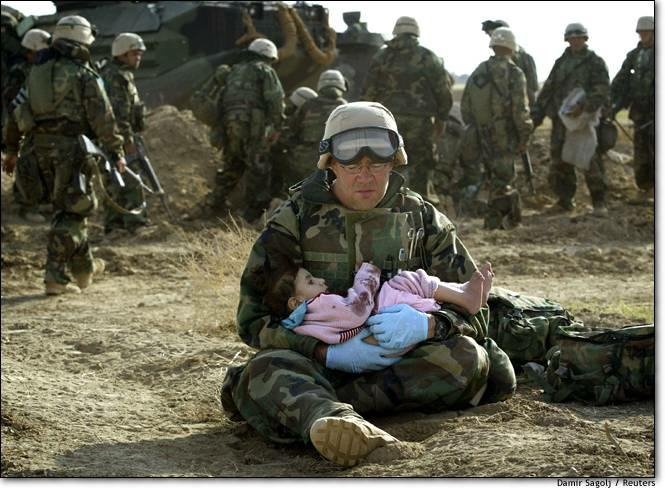

just so we dont forget that theres a war on in babylon...two pics which i got in an email recently. I wonder if americans who look at this picture feel proud of their soldiers and say the slogan " support our troops" or do they feel that these pictures would be so much better without the uniforms, the soldier would look so much better at home in civilian clothes, playing with kids, petting his cat and leading a normal life. So is it "support our boys" or is it "bring the boys back home".
The kid playing with the cat really shouldnt be in a dehumanizing war, where years down the line he still cant escape the memories of blood and bombs..he shouldnt be at risk of getting his limbs blown off or worse.. why couldnt he be part of the peace corps teaching kids in africa to read, why is he being made to carry a rifle around?
Thursday, April 06, 2006
isnt communism the opposite of democracy?
Police arrested about 300 activists from different parties early Thursday, the first day of the opposition's anti-monarchy demonstrations across Nepal's capital, a top opposition leader said.............
Top students leaders, women's activists and members of the country's seven main political parties were among those arrested, said Khadga Prasad Oli, a top communist leader and one of the organizers of the four-day nationwide strike to pressure King Gyanendra to restore democracy more than a year after he seized control of the government
A communist leader wanting to restore democracy??
The statement of a communist leader wanting to restore democracy sounds strange to a lot of us who think that communnism is the opposite of democracy. I too used to think that, till one day a communist student leader gently told me something about what he did.
communism is the opposite of capitalism, not democracy.
in a country, profits are divided between the labour and the
capitalist ( owner ). This was true in classical industrial situations
like factories, mills, agriculture etc.
Now in america you see wages remaining stagnant or even going down a
little while companies report enormous profit growth ( eg Walmart ).
The share of profits going to the labour force used to be very small
earlier, then came the unionization, government regulation and then
shortage of labor force, which led to a steady increase in the share
of profits that went to labor. Now with India and China entering the
global labor pool, employers in developed countries, like US, are
moving their production/work to cheaper locations. This has led to the
decline in the share of profits going to labor in the last 10 years or
so.
Communism emerged as an alternative to this model, where it was the
vision of Karl Marx that workers of the world would unite and take
control of the means of production ( employee owned factories /
collective farms ). During the Clinton dot.com era, surprisingly, a
lot of communist principles were in play in the market, like employee
ownership of their companies ( stock options ). Communism also aims at
a fair redistribution of wealth. They talk of taking all the land from
the landowners and then redistributing it equally to all people. Also
of free education, free healthcare, free housing etc etc to all people
provided by the state. This means that the difference in standard of
living between the upper layer and the bottom layer is very less.
What they did say was that in most capitalist countries, democracy has
become controlled by people with money. There has emerged a upper
elite of rich men who control most things. In such cases if there is
no other way then it is better to bring a revolution and change the
system.
As with most systems, the practical implementation of these ideals
proved to be difficult. Once the communist systems were in place,
there emerged a ruling elite who started to control the system and
dictators like Stalin, Mao gave it a bad name.
The lessons the communists learned from the previous century ( which
can also be called the communist century ) were many. One lesson, was
that a communist movement must remain connected to the poor, the
workers, the labor and the countryside. This was shown in Vietnam and
in China, where peoples armies won victories and ended up ruling the
country. Another lesson learned is that there is a tendency of
communist systems to become like dictatorships, so there must be
strong democratic systems inside the communist party which allow the
people to have a strong voice in the system. The third lesson learned
was that even though communist systems are unglamorous, with run down
cars and industrial style buildings, they still do a very good job of
providing education, security and healthcare to their citizens.
The crime rate in USSR was very low, Cuba has excellent healthcare and
education. Earlier jokes were made about east european and soviet
countries, about how people stood in line for hours etc. and how their
cars were tincans on wheels. Capitalism swept into these countries
after the fall of the berlin wall. Then came the mafia, prostitution,
homeless, breakdown in healthcare for the poor, drop in literacy
levels and enornous amounts of theft, robbery and bribery. Say what
you may about Cuba, but the same hurricanes hit Cuba and Louisiana.
The poor and underpriviliged were left exposed in US and their
condition was exposed for everyone to see.
For a long time in many countries, the communists have entered the
mainstream, formed political parties and fought elections aiming to
use the democratic structure to come into power. In India, communists
have consistently ruled two states, through victories in elections, a
good organised grassroots party structure and consistent pro poor
policies. Kerala and Bengal have had communist party governments and
they have not done too badly. In fact kerala has education and
healthcare levels comparable to the best in the world. In bengal, it
has been a mixed success, capital and factories fled when the
communists came to power. They however did carry out a successful land
redistribution programme among the farmers and landless labourers.
There is a marked difference visible in the living standards and
mentality of the poorest of the poor in these places. There is a lack
of mercedes benzes and five star hotels though and the flight of
capital has led to tremendous unemployment. Still now, with education
levels and basic infrastructure being very good in Bengal, factories
and software companies, outsourcing shops etc are returning there and
they are very much part of the boom.
Communism probably should be understood as "community ruled" or
"community based". It emphasises the role of communities and groups
and unions and collectives. Capitalism emphasises individuality and
money, capital and millionaires. Therefore to think that communism
automatically rules out democracy is a wrong assumption. Communism has
slogans like " Power to the people". Capitalism has slogans like "
Survival of the fittest".
In nepal, the communist party fought elections whenever possible. The
party had been formed to struggle against imperialism and feudalism,
as symbolised by the rule of the Rana kings in Nepal. Their moment of
truth came in 1991 elections. The results of the elections,
demonstrated that a coalition of various communist parties was a major
political force in Nepalese politics
Now in Nepal, there was an incident which makes a mockery, both of
free speech, media reporting, law and order, international diplomacy
and many other things. Having turned over most power to the parliament
and democratically elected governments, the king was taking a backseat
in politics. This was a threat to the entrenched vested interests,
like the Generals in the army, the large landowners, the power brokers
et al. So one fine day, a few years ago, the entire royal family was
gunned down at their own dining table. The story was released that the
crown prince had a tragic romance, which upset him, and he killed his
whole family and then shot himself. Of the people in the room, only
one cousin survived. Co incidentally that cousin is now the crown
prince of nepal and his father Gyanendra is now the new king.
Gyanendra gradually consolidated power, dissolved parliament and
kicked out all elected representatives. The political parties could do
not much but protest, since the Royal Nepal Army was on the side of
Gyanendra. It was the communists who retreated back into the
underground, into the villages and hills and launched a grassroots
movement, which has been fighting the Army for control of the land. At
last estimates, the communists controlled more than 60% of nepal,
running parallel governments, collecting taxes, running tribunals,
hospitals, courts etc.
The support for the King is dwindling. India which had earlier
supported him, now strongly urges him to hold elections again and
restore democracy. China too, does not look too kindly on his
activites. To continue the fight against the Communists, the King
needs weapons. China and India both are reluctant to give them to him.
Who else can he turn to. Surprise!, there is one country which is
willing to support him and send him weapons, the USA. They probably
feel that having a brutal despotic murdering ruler is preferable to a
democratically elected communist government.
Thats what my opinion of the situation in Nepal is. I grew up about 50
miles from the india - nepalese border. I travelled through its roads
and villages and mountains a lot and some of my best friends are
nepalese. It was indeed a sad day for all of us, and a dark day for
justice and truth, when the royal family was massacred and the new
king siezed power. That is the relevant question, of why the world
stood by and let it happen. The fact that communists are fighting him
and want to restore democracy and fight elections is not such a
strange thing.
read my earlier blog entry
http://dotook.blogspot.com/2006/02/interview-with-communist-leader-of.html
for the interview with Prachanda who is heading the communist party
movement in nepal.
Wednesday, April 05, 2006
plans under development - house in gurgaon









finally the plans for the house in gurgaon are done...now for the " look "
this is going to be tricky.
now comes the first view -

this is how the look is developing...click on any image to enlarge
update - medha patkar arrested
In a dramatic swoop late Wednesday night, Delhi police arrested Medha Patkar, leader, Narmada Bachao Andolan and took her to a hospital, following extreme deterioration in her condition. Patkar was arrested on the charge of attempting to commit suicide. The scores of NBA activists who clashed with the police, shouting anti-government slogans and protesting Patkar's arrest were also arrested on charges of rioting. They were taken to the Parliament Street police station. To arrest a weak Patkar, police had to broke the cordon of these activists, who had surrounded her; she was lying on a bed on a pavement near Jantar Mantar. Even an hour after the arrest, several activists continued to protest and the area has remained tense.
quick and dirty operating system.
During one of those last long nights working to deliver DOS 2.0 in early 1983, I am told that Paul Allen heard Gates and Ballmer discussing his health and talking about how to get his Microsoft shares back if Allen were to die.
after a long time, cringely returns to what he does best, anecdotes about the people in the tech world. Here he dissects Microsoft and serves up some tasty morsels like the one above. Read the full piece here
after a long time, cringely returns to what he does best, anecdotes about the people in the tech world. Here he dissects Microsoft and serves up some tasty morsels like the one above. Read the full piece here
News - Who has the most oil?
Analysis by the US Department of Energy (DoE) - seen by Newsnight - shows that at $50 a barrel Venezuela - not Saudi Arabia - will have the biggest oil reserves in Opec.
Venezuela has vast deposits of extra-heavy oil in the Orinoco. Traditionally these have not been counted because at $20 a barrel they were too expensive to exploit - but at $50 a barrel melting them into liquid petroleum becomes extremely profitable.
The DoE report shows that at today's prices Venezuela's oil reserves are bigger than those of the entire Middle East - including Saudi Arabia, the Gulf states, Iran and Iraq.
read the BBC's article on its interview with Chavez here.
Another forceful quote from Chavez :
Mr Chavez does not accept UK Prime Minister Tony Blair's criticism of him for lining up with Mr Castro.
He told Newsnight: "If someone is sleeping together it is Bush and Blair. They share the same bed."
Tuesday, April 04, 2006
dont worship the dead..save the living

The construction of large dams on the River Narmada in central India and its impact on millions of people living in the river valley has become one of the most important social issues in contemporary India.
The recent decision by the authorities to raise the SSP dam height to 121m is in violation of the Supreme Court rulings of Oct 2000 and March 2005 that unambiguously state that further construction cannot happen until rehabilitation of temporaorily and permanently affected families is completed as per the Narmada Tribunal Award. Families are yet to be rehabilitated even at the 110m level.
Three representatives from the Narmada valley (Jamsing Nargave from village Amlali Badwani district, Bhagwatibai Jatpuria from village Nissarpur Dhar district and Medha Patkar) are on indefinite hunger strike at Jantar mantar.
Medha Patkar shown in the photo opposite has a simple point. How can a state, flood thousands of villages and cities, submerge temples, inundate ancestral land, uproot a whole population without even consulting them. What manner of arrogance is this.
After peaceful protests, approaching the courts and arguing their case in a civilised way there had been some headway. Then came the decision last week, by the government to raise the height of the dam another 12 metres. This would increase the area being flooded and uproot even more villages. This while the earlier villagers hadnt been resettled and rehabilitated yet. This move is also in direct violation of the Supreme courts orders, which had stopped further construction till the displaced people were resettled. The nonviolent protests earlier were dealt with brutally by the authorities. So, in the oldest tradition of India, this frail old woman lay down in the capital city and stopped eating. Its been seven days and counting and she is there, doing a gandhi.
We still worship Gandhi, pay lip service to his ideals and declare him the father of our nation. The man who wished to live as poorly as the rest of his countrymen, who fasted to stir the conscience of his people and their rulers, who felt the pain of the downtrodden. We admire him today. We call his path the right path. He is dead and long gone, killed by an assassins bullet.
Medha has gone 7 days without food. Let us try to imagine what that means. Let us probe further into why an old lady is starving herself to death in the heart of the capital city. Let us stop worshipping the dead and look at the living. All those who can, please visit the Jantar Mantar in CP in Delhi and show your solidarity, if not for her cause then at least for her courage.
related links -
BBC
Medha Patkars press release
Visit the Narmada Bachao Andolan website here ( Save Narmada Movement )
The build up to this protest, when everything else fails.
an interview with Medha a few years ago.
Medha Patkar turns down PM’s request
Arrested and released.
Editorial in HT - For many Indians, the word ‘development’ sends a shudder down their spines. What should have been a term eliciting optimism and giving flesh to progress has become a cuss word. One prime reason for things coming to such a pass is that governments have allowed development to become synonymous with misery for many. One key element of many a developmental project involves mass displacement. This involves necessary social disruption that requires compensation and rehabilitation of the displaced. On paper, all public developmental projects have rehabilitation measures built into them. But the reality is that while successive governments have tom-tommed their socialist credentials, the second part of the development-rehabilitation exercise is either forgotten or is forcibly jettisoned. That is the reason why people like Medha Patkar are forced to go on a hunger strike so that the injustice meted out to the displaced in the name of development is addressed and corrected.
Read More of " Development and People"
Friday, March 31, 2006
reporting something i heard
a colleague of mine hails from the countryside in Haryana. She was telling me yesterday about how she had just heard of a sad incident. In her village, a 47 yr old man committed suicide by hanging himself from a tree. He had earlier been employed in a small factory but that had closed down some time ago, leaving him dependent on his farm. This year, the unseasonal rain played havoc with the standing crop. Faced with the mounting pressure of ekeing out a living from the soil, he took his own life by hanging himself. He left behind a wife and two children.
The tragedy is unfolding closer and closer to us. Haryana is one of the richer states in India and if its starting to happen here, I shudder to think what it must be like everywhere else.
Oh, and the stock market continues its meteoric rise, breaking all records.
The tragedy is unfolding closer and closer to us. Haryana is one of the richer states in India and if its starting to happen here, I shudder to think what it must be like everywhere else.
Oh, and the stock market continues its meteoric rise, breaking all records.
Upon a T-Shirt
Upon a T-Shirt
A very short poem.
By Evan Eisenberg
[front]
What does it say? No matter—it's
A pretext to peruse my tits;
Whilst on the other side you'll find
[back]
Post-text to study: my behind.
A very short poem.
By Evan Eisenberg
[front]
What does it say? No matter—it's
A pretext to peruse my tits;
Whilst on the other side you'll find
[back]
Post-text to study: my behind.
Thursday, March 30, 2006
south indian men
dunno if u read this before..but its nice...an old one..but nice.
How can a man like me brought up in roomy lungis and oversized polyester shirts ever walk the walk in painted on jeans (that makes a big impression) and neon yellow rib hugging t shirts? All I can do is don my worn "comfort fit" jeans and floral shirt. Which is pretty low on the "Look at me lady" scale, just above fig leaf skirt and feather headgear a la caveman, and a mite below Khakhi Shirt over a red t shirt and baggy khakhi pants and white trainers a la Rajni in "Badsha".
How can a man like me brought up in roomy lungis and oversized polyester shirts ever walk the walk in painted on jeans (that makes a big impression) and neon yellow rib hugging t shirts? All I can do is don my worn "comfort fit" jeans and floral shirt. Which is pretty low on the "Look at me lady" scale, just above fig leaf skirt and feather headgear a la caveman, and a mite below Khakhi Shirt over a red t shirt and baggy khakhi pants and white trainers a la Rajni in "Badsha".
Manohar Shyam Joshi no more
A legend in the indian literary world has left us today. Though some would say that he wasnt up there with the famous literary giants of India, few would argue about the reach and impact his writing had in India. From popular television serials, to film stories, to editing a popular hindi weekly to writing a bunch of hindi books he left a lasting imprint in the mind of three generations of indians. No one has captured the flavor of bombay like he did in his book "kuru kuru swaaha" and no one has written more beautifully about the simple life in the small towns of the himalayas where he was born and raised. All through his writing there runs a vein of self deprecatory humor, a flair for hyperbole and farce mixed with a tinge of pathos and romance. Through it all, his writing rings true, he knows what he writes about and hold up a clear mirror for society to see itself.
Manohar Shyam Joshi, R.I.P.
NEW DELHI, MAR 30 (PTI)
Renowned writer Manohar Shyam Joshi,the litterateur, aged 73, breathed his last at around 5 am at the National Heart Institute here.
Joshi has written several books including 'Kuru Kuru Swaha', 'Kayap' 'Hariya Hercules Ki Hairaani', Baton Baton Main', 'Mandir Ghat Ki Pooriyan', 'Kaise Kissago' and 'Tata Professor'.
Manohar Shyam Joshi, R.I.P.
NEW DELHI, MAR 30 (PTI)
Renowned writer Manohar Shyam Joshi,the litterateur, aged 73, breathed his last at around 5 am at the National Heart Institute here.
Joshi has written several books including 'Kuru Kuru Swaha', 'Kayap' 'Hariya Hercules Ki Hairaani', Baton Baton Main', 'Mandir Ghat Ki Pooriyan', 'Kaise Kissago' and 'Tata Professor'.
nanaji
A couple of weeks have passed since the day when Nanaji left us. Hindi has different words for grandparents. Dada means your fathers father, while Nana is your mothers father. Ji is a mark of respect. If my blog fills you with respect for me, then you can call me Bloggerji.
I was his eldest grandchild and I learnt a lot from him. All his life he was always polite, alert and disciplined. He loved the finer things in life and though a teetotaller had a really nice wine collection. He started out in business in Calcutta when India was yet to be free, and the British ran most of the businesses. After trying his luck in various trades, from film producing, to candle making he finally found his calling as a steel trader.
He was particularly suited for this business since he was very presentable, dressed impeccably, talked politely, listened attentively, went out of his way to make new friends and keep old ones, was meticulous in his accounting and disciplined in his expenditure. Ever since I remember, his day would start at 6 am, with a prayer, then a hearty breakfast and off to office. Evenings he would return, bathe, dress for dinner and preside over the dining table.
He once told me how he got his first break. As a young man with no capital and little technical education, he went from office to office asking for work. He didnt ask for a job, but met the people in big industrial houses, told them that he was in the trade and if they had any local requirements for materials he would be glad to try and help. Finally, one englishman at a electrical equipment manufacturing company, looked this young man over, and told him, Young man, if by tomorrow you could come with a few tonnes of a particular grade and size of steel, the order is yours.
This was his first break, and as soon as he left the office he searched the city, called at everyone he know in the trade, talked to the people working in warehouses and the next morning at 9 o clock he met the factory manager outide the factory gates. The manager thought that he would hear another excuse about how its taking a few more days....and was pleasantly surprised to find the young man asking him where should the goods be delivered, since there was a truck loaded with the exact stuff, standing right besides them. Since then he never looked back. The electric equipment factory was his client for the next 50 years and so were almost all the major manufacturers in Calcutta.
A rented apartment in a nice neighbourhood in Calcutta and a rented office in the business district were his base. From there he built up his fortune and those of his friends and family. He never bought any property or dead assets, preferring to keep all his investments in the stock markets. Once when he had to undergo a heart operation, he was able to just sign a piece of paper and pay for all the expenses himself. Till his last he attended cultural evenings, ate out in style and dressed expensively and correctly, all from his own pocket. He lived and breathed his last in his own house, in his own bed, early in the morning, without troubling anyone. Just called out once and then left surrounded by his wife, daughter, son, grandchild ( my sister) and greatgrandchild ( her daughter ). He left us all remembering someone who all his life wished to be a gentleman and a good human being and succeeded magnificently.
And now, the end is near;
And so I face the final curtain.
My friend, I’ll say it clear,
I’ll state my case, of which I’m certain.
I’ve lived a life that’s full.
I’ve traveled each and ev’ry highway;
And more, much more than this,
I did it my way.
Regrets, I’ve had a few;
But then again, too few to mention.
I did what I had to do
And saw it through without exemption.
I planned each charted course;
Each careful step along the byway,
But more, much more than this,
I did it my way.
Yes, there were times, I’m sure you knew
When I bit off more than I could chew.
But through it all, when there was doubt,
I ate it up and spit it out.
I faced it all and I stood tall;
And did it my way.
I’ve loved, I’ve laughed and cried.
I’ve had my fill; my share of losing.
And now, as tears subside,
I find it all so amusing.
To think I did all that;
And may I say - not in a shy way,
No, oh no not me,
I did it my way.
For what is a man, what has he got?
If not himself, then he has naught.
To say the things he truly feels;
And not the words of one who kneels.
The record shows I took the blows -
And did it my way!
I was his eldest grandchild and I learnt a lot from him. All his life he was always polite, alert and disciplined. He loved the finer things in life and though a teetotaller had a really nice wine collection. He started out in business in Calcutta when India was yet to be free, and the British ran most of the businesses. After trying his luck in various trades, from film producing, to candle making he finally found his calling as a steel trader.
He was particularly suited for this business since he was very presentable, dressed impeccably, talked politely, listened attentively, went out of his way to make new friends and keep old ones, was meticulous in his accounting and disciplined in his expenditure. Ever since I remember, his day would start at 6 am, with a prayer, then a hearty breakfast and off to office. Evenings he would return, bathe, dress for dinner and preside over the dining table.
He once told me how he got his first break. As a young man with no capital and little technical education, he went from office to office asking for work. He didnt ask for a job, but met the people in big industrial houses, told them that he was in the trade and if they had any local requirements for materials he would be glad to try and help. Finally, one englishman at a electrical equipment manufacturing company, looked this young man over, and told him, Young man, if by tomorrow you could come with a few tonnes of a particular grade and size of steel, the order is yours.
This was his first break, and as soon as he left the office he searched the city, called at everyone he know in the trade, talked to the people working in warehouses and the next morning at 9 o clock he met the factory manager outide the factory gates. The manager thought that he would hear another excuse about how its taking a few more days....and was pleasantly surprised to find the young man asking him where should the goods be delivered, since there was a truck loaded with the exact stuff, standing right besides them. Since then he never looked back. The electric equipment factory was his client for the next 50 years and so were almost all the major manufacturers in Calcutta.
A rented apartment in a nice neighbourhood in Calcutta and a rented office in the business district were his base. From there he built up his fortune and those of his friends and family. He never bought any property or dead assets, preferring to keep all his investments in the stock markets. Once when he had to undergo a heart operation, he was able to just sign a piece of paper and pay for all the expenses himself. Till his last he attended cultural evenings, ate out in style and dressed expensively and correctly, all from his own pocket. He lived and breathed his last in his own house, in his own bed, early in the morning, without troubling anyone. Just called out once and then left surrounded by his wife, daughter, son, grandchild ( my sister) and greatgrandchild ( her daughter ). He left us all remembering someone who all his life wished to be a gentleman and a good human being and succeeded magnificently.
And now, the end is near;
And so I face the final curtain.
My friend, I’ll say it clear,
I’ll state my case, of which I’m certain.
I’ve lived a life that’s full.
I’ve traveled each and ev’ry highway;
And more, much more than this,
I did it my way.
Regrets, I’ve had a few;
But then again, too few to mention.
I did what I had to do
And saw it through without exemption.
I planned each charted course;
Each careful step along the byway,
But more, much more than this,
I did it my way.
Yes, there were times, I’m sure you knew
When I bit off more than I could chew.
But through it all, when there was doubt,
I ate it up and spit it out.
I faced it all and I stood tall;
And did it my way.
I’ve loved, I’ve laughed and cried.
I’ve had my fill; my share of losing.
And now, as tears subside,
I find it all so amusing.
To think I did all that;
And may I say - not in a shy way,
No, oh no not me,
I did it my way.
For what is a man, what has he got?
If not himself, then he has naught.
To say the things he truly feels;
And not the words of one who kneels.
The record shows I took the blows -
And did it my way!
Wednesday, March 29, 2006
the bend in the river...from the land of the two rivers
theres this lovely funny bright girl in Iraq, Baghdad to be precise who is writing a blog from there....u can read her blog here . Below is an excerpt from her latest post.... I think she has done a lot for the credibility of blogging as a true journalistic medium. One gets a good feel of how things really are by following her blog while a lot of the print media reporting somehow seems very fluffy.
The line said:.
وزارة الدفاع تدعو المواطنين الى عدم الانصياع لاوامر دوريات الجيش والشرطة الليلية اذا لم تكن برفقة قوات التحالف العاملة في تلك المنطقة
The translation:
“The Ministry of Defense requests that civilians do not comply with the orders of the army or police on nightly patrols unless they are accompanied by coalition forces working in that area.”
That’s how messed up the country is at this point
Quote of the day
Rita Rudner - "My mother buried three husbands - and two of them were only napping."
Friday, March 24, 2006
quote of the day
THERE'S a poem on a wall at Apple Computer's headquarters that starts like this: "Here's to the crazy ones. The misfits. The rebels. The troublemakers. The round pegs in the square holes."
Thursday, March 23, 2006
One Morning in Haditha
One Morning in Haditha
U.S. Marines killed 15 Iraqi civilians in their homes last November. Was it self-defense, an accident or cold-blooded revenge? A TIME exclusive
By TIM MCGIRK/ BAGHDAD
Posted Sunday, Mar. 19, 2006
The incident seemed like so many others from this war, the kind of tragedy that has become numbingly routine amid the daily reports of violence in Iraq. On the morning of Nov. 19, 2005, a roadside bomb struck a humvee carrying Marines from Kilo Company, 3rd Battalion, 1st Marines, on a road near Haditha, a restive town in western Iraq. The bomb killed Lance Corporal Miguel (T.J.) Terrazas, 20, from El Paso, Texas. The next day a Marine communiqué from Camp Blue Diamond in Ramadi reported that Terrazas and 15 Iraqi civilians were killed by the blast and that "gunmen attacked the convoy with small-arms fire," prompting the Marines to return fire, killing eight insurgents and wounding one other. The Marines from Kilo Company held a memorial service for Terrazas at their camp in Haditha. They wrote messages like "T.J., you were a great friend. I'm going to miss seeing you around" on smooth stones and piled them in a funeral mound. And the war moved on.
But the details of what happened that morning in Haditha are more disturbing, disputed and horrific than the military initially reported. According to eyewitnesses and local officials interviewed over the past 10 weeks, the civilians who died in Haditha on Nov. 19 were killed not by a roadside bomb but by the Marines themselves, who went on a rampage in the village after the attack, killing 15 unarmed Iraqis in their homes, including seven women and three children. Human-rights activists say that if the accusations are true, the incident ranks as the worst case of deliberate killing of Iraqi civilians by U.S. service members since the war began.
read more
U.S. Marines killed 15 Iraqi civilians in their homes last November. Was it self-defense, an accident or cold-blooded revenge? A TIME exclusive
By TIM MCGIRK/ BAGHDAD
Posted Sunday, Mar. 19, 2006
The incident seemed like so many others from this war, the kind of tragedy that has become numbingly routine amid the daily reports of violence in Iraq. On the morning of Nov. 19, 2005, a roadside bomb struck a humvee carrying Marines from Kilo Company, 3rd Battalion, 1st Marines, on a road near Haditha, a restive town in western Iraq. The bomb killed Lance Corporal Miguel (T.J.) Terrazas, 20, from El Paso, Texas. The next day a Marine communiqué from Camp Blue Diamond in Ramadi reported that Terrazas and 15 Iraqi civilians were killed by the blast and that "gunmen attacked the convoy with small-arms fire," prompting the Marines to return fire, killing eight insurgents and wounding one other. The Marines from Kilo Company held a memorial service for Terrazas at their camp in Haditha. They wrote messages like "T.J., you were a great friend. I'm going to miss seeing you around" on smooth stones and piled them in a funeral mound. And the war moved on.
But the details of what happened that morning in Haditha are more disturbing, disputed and horrific than the military initially reported. According to eyewitnesses and local officials interviewed over the past 10 weeks, the civilians who died in Haditha on Nov. 19 were killed not by a roadside bomb but by the Marines themselves, who went on a rampage in the village after the attack, killing 15 unarmed Iraqis in their homes, including seven women and three children. Human-rights activists say that if the accusations are true, the incident ranks as the worst case of deliberate killing of Iraqi civilians by U.S. service members since the war began.
read more
Tuesday, March 21, 2006
asok
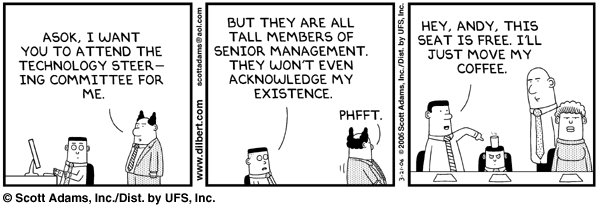
"As you gain experience, you'll realise that all logical questions are considered insubordination."
- Dilbert advises Asok the Intern
todays dilbert featured one of the most lovable indian geeks to inhabit cartoonspace....asok... check it out here
and the wikipedia entry has him as -
Pronounced "Ah-shook." A young intern. He works very hard but does not always get proper recognition. Asok is intensely intelligent but naive about corporate life; the shattering of his illusions are frequent comic fodder. Asok is Indian, and graduated from the Indian Institute of Technology (IIT). He does not eat, at least, beef. The others, especially the Boss, often unwittingly trample on his cultural beliefs. If Asok mentions this, he is normally ignored. If Asok's reported test scores and college accomplishments are correct, he is the smartest member of the engineering team.
for some other dilbert quotes .... see this .
The bbc has a writeup about asok with one of the classic asok cartoon strips. see it here.
some more trivia about asok from http://www.triviaasylum.com/dilbert/diltriv.html
Asok - Summer intern [3/18+/96]
Graduated from the Indian Institute of Technology. [10/30/05]
PHB can't give him a raise because he's too young. [2/28/99]
Makes sarcastic remarks to the PHB via speakerphone. [12/8/96]
Alice threatens to launch Asok with the "Internapult". [8/23/96]
Tells the PHB about people using entire colons where semicolons would do just fine. [3/20/96]
...a lot of IIT ians get upset with what they see as stereotyping of the indian techie....but that just goes to show, even with a good college education, there isnt much difference between bearded mullahs and laptop warriors, when it comes to getting upset over cartoons. Its a cartoon for crying out loud.
one of my favourite asok things was when in one strip..the pointy haired boss (PHB)said that they were going to study if its possible to deliver the internet through the sewer systems and told asok to do a report. He would have to crawl through sewers holding a optic fibre cable between his teeth and breathing through a straw.
and Asok, his face lit up in the last panel, and he says...oh wow ..i get a straw.
my pal,parimal saw it in office...when it came out....and he came back laughing and told me, and for many a day, we would use this as our punchline...oh wow...i get a straw.
and to end...lets quote the bbc again -
In Dilbert, a comic character called Asok claims he is from IIT and therefore "mentally superior to most people on Earth".
In one strip, Asok says: "At the Indian Institute of Technology, I learned to use my huge brain."
"But I try not to frighten ordinary people with any gratuitous displays of mental superiority.
"For example," says Asok, "I no longer reheat my tea by holding it to my forehead and imagining fire."
Mr Adams, who began drawing cartoons in the 1980s while working in a telecommunications company, said he has several friends who graduated from IIT.
"I have known several IIT graduates over the years. The character Asok is named after an ex co-worker from my days in the tech world," he told BBC News Online.
"I thought it would be a funny contrast to have Asok come from the most competitive school system in the world only to find out that intelligence doesn't always help in the workplace."
Asked how IIT graduates differed from engineering graduates from all over the world, Mr Adams said: "They are smarter."
Friday, March 17, 2006
empire and energy
The end of previous empires, Phillips explains, also corresponded with the obsolescence of their dominant energy source. The Netherlands was the "the wind and water hegemon" from 1590 to the 1720s. In the mid-18th century, Britain, harnessing the newly discovered power of coal, became the leading world power, only to be left behind by oil-fueled America. "The evidence is that leading world economic powers, after an energy golden era, lose their magic -- and not by accident," he writes. "The infrastructures created by these unusual, even quirky, successes eventually became economic obstacle courses and inertia-bound burdens."
the full article is here...u will have to watch a free ad to read it...but its worth it...
the full article is here...u will have to watch a free ad to read it...but its worth it...
Thursday, March 16, 2006
dumbest moments in business
In June, Guidant recalls 50,000 heart defibrillators--about 38,600 of them already implanted in people's chests--that might, in rare cases, short-circuit when they're supposed to deliver vital electrical jolts. The recall comes after the devices were reported to have failed at least 45 times, including two instances in which the patients died. Guidant fixed the flaw in devices made after mid-2002 but neglected to inform doctors and continued to sell units produced before the fix. The recall advises patients that, should the device malfunction, it will emit a beeping noise, at which point they should contact their doctors or head to an emergency room.
read more
and another from the same list -
The pen is mightier than the sword.
Boeing CEO Harry Stonecipher, brought out of retirement to restore the company's image in the wake of ethical lapses by predecessor Phil Condit--including allegations of affairs with female employees--is forced to resign for having an affair with a female employee. Though the relationship was consensual, Boeing's board determined that Stonecipher had violated the company's code of conduct--a document that all 160,000 Boeing employees have been required to sign annually since it was put into place by Stonecipher in 2003.
QUOTE OF THE YEAR -
"Women should be all dressed in white, like all other domestic appliances."
-- Formula One chief Bernie Ecclestone, on Danica Patrick's fourth-place finish at the Indy 500, the best showing ever by a woman in the race.
read more
and another from the same list -
The pen is mightier than the sword.
Boeing CEO Harry Stonecipher, brought out of retirement to restore the company's image in the wake of ethical lapses by predecessor Phil Condit--including allegations of affairs with female employees--is forced to resign for having an affair with a female employee. Though the relationship was consensual, Boeing's board determined that Stonecipher had violated the company's code of conduct--a document that all 160,000 Boeing employees have been required to sign annually since it was put into place by Stonecipher in 2003.
QUOTE OF THE YEAR -
"Women should be all dressed in white, like all other domestic appliances."
-- Formula One chief Bernie Ecclestone, on Danica Patrick's fourth-place finish at the Indy 500, the best showing ever by a woman in the race.
Wednesday, March 08, 2006
quote of the day :)
"In an age of advanced technology," Aldous Huxley foresaw, "inefficiency is the sin against the Holy Ghost."
the state of the nation
In Jangpura, a small neighborhood in Delhi, my friends Bela Malik and Tommy Mathew planned to welcome Laura Bush. As with all State visits, between the negotiations and the meetings, the hosts arrange for the dignitaries to tour safe "soft" sites that become front-page photo opportunities. As if to send a signal to their Evangelical base, on March 2 Laura Bush planned to visit a small NGO run by the Missionaries of Charity. Bela, Tommy and other friends stitched a couple of bed sheets together and made a banner that read: "Laura Bush, how about a photo-op with the orphaned, maimed, dead children of Iraq?" It was a loud question, written in a quiet way, and hung from a modest balcony. A few hours before Laura Bush's cavalcade was to go down the road, US secret service flooded the neighborhood. In their wake came the Area Station House officer who entered Bela and Tommy's apartment, confiscated the banner, refused to allow Tommy entry into his own flat, and posted a police officer on the balcony. A thousand of Delhi's finest overran Jangpura.
Laura Bush never got to the Missionaries of Charity. Something else came up.
In an email message, Bela wrote, "I came closest to feeling what being under an imperialist system was and feeling first-hand the might of an armed invasion. It wasn't that in a real sense, but for a few hours, it was that. 'Security' is a funny term in the way it is used."
read entire article here
Laura Bush never got to the Missionaries of Charity. Something else came up.
In an email message, Bela wrote, "I came closest to feeling what being under an imperialist system was and feeling first-hand the might of an armed invasion. It wasn't that in a real sense, but for a few hours, it was that. 'Security' is a funny term in the way it is used."
read entire article here
Tuesday, March 07, 2006
spotted in Gurgaon
I saw a peacock today... sitting on the branch of a bare tree....facing away from me.
His long tail hanging down like a magic carpet...a splash of color amid the brown earth and grey sky...
Had been to my friends village on the outskirts of Gurgaon, and peacocks are common there. His sister-in-law scatters grain in the courtyard of her house everyday and they come to feed. They are her friends. Today that house and courtyard are being broken down to make way for a new house. I had gone along with my friend to take a look and give my views on how the new house should be. We sat discussing while in the background were the dug-up courtyard, a few scattered household possessions and the thud thud of the workmens tools. The family had gone off to stay in a small new house nearby while this one is rebuilt. An old village house, with mud walls, roofs of wooden beams supporting stone slabs and a brick lined courtyard would soon be no more. In its place, a modern house would come up, with hot running water and modular kitchens and air-conditioning. What would happen to the peacocks I wondered.
And then on my way back, I saw the peacock on the tree, its tail of blue green gold and red, sitting on the branch, waiting for us to hurry up and build the house, so his friend could return and scatter grain and the peacock club could hold its regular afternoon meetings again.
His long tail hanging down like a magic carpet...a splash of color amid the brown earth and grey sky...
Had been to my friends village on the outskirts of Gurgaon, and peacocks are common there. His sister-in-law scatters grain in the courtyard of her house everyday and they come to feed. They are her friends. Today that house and courtyard are being broken down to make way for a new house. I had gone along with my friend to take a look and give my views on how the new house should be. We sat discussing while in the background were the dug-up courtyard, a few scattered household possessions and the thud thud of the workmens tools. The family had gone off to stay in a small new house nearby while this one is rebuilt. An old village house, with mud walls, roofs of wooden beams supporting stone slabs and a brick lined courtyard would soon be no more. In its place, a modern house would come up, with hot running water and modular kitchens and air-conditioning. What would happen to the peacocks I wondered.
And then on my way back, I saw the peacock on the tree, its tail of blue green gold and red, sitting on the branch, waiting for us to hurry up and build the house, so his friend could return and scatter grain and the peacock club could hold its regular afternoon meetings again.
spotted in Newsweek
and I quote - "Even a college-educated Indian worker earns one fifth what his American counterpart does. And he's willing to put in 12-hour days, six days a week. That's why U.S. companies are expected to employ more than 1.5 million service workers in India by 2008, a threefold increase from today, according to McKinsey & Co."
12 hours a day, 6 days a week.....well yes..I did that once too...I did hear that some call centres were running 12 hour shifts...6 days a week. Not the best way to conduct business I feel.
12 hours a day, 6 days a week.....well yes..I did that once too...I did hear that some call centres were running 12 hour shifts...6 days a week. Not the best way to conduct business I feel.
Monday, March 06, 2006
IT Job Stats in US - 2001 - 2006
During the past five years (Jan 01 - Jan 06), the information sector of the US economy lost 645,000 jobs or 17.4% of its work force. Computer systems design and related lost 116,000 jobs or 8.7% of its work force. read related article from someone who argues against outsourcing.
an the oscar goes to
Oscar weekend has come and gone...Jon Stewart hosted them and we even had a rap act singing a sanitized version of their song. Below I present my take on some of the movies that were in the running..
Munich - Should have been an outright winner. Treading gingerly through a minefield of potential controversies, the real success of Munich is that no one could find anything much to protest about it. It is a story about the young men who become part of the official killing machines of their countries. It also is a look at Europe in its age old role of the theatre of war. Its a gentle attempt to hold a discussion rather than shout slogans or take positions. Probably the director too faced the pain that the main protagonist felt, that of being powerless to ask too many questions.
Capote I remember buying a tattered book off the pavement in Roorkee for 20 rupees called "in cold blood" by Truman Capote. I was 21 yrs old, and rather bored with life. The book starts off as a newspaper report and continues in the same way. Its a non fictional account of the last days in the life of two guys in america, who break into a house, kill the occupants, escape, are caught and executed by the state. I knew right away that I was reading something extraordinary, the dispassionate style, the clinical stating of facts, this was a new style of writing. Truman Capote who cynically hunted the story down, befriended the killers and wrote about them was no ordinary writer and no ordinary man. Having become nothing but a story telling machine while writing this book, he never wrote again and died an alchoholic. This movie tells of the writing of that book. It doesnt have many weak points and the heroine from " the 40 yr old virgin " plays a great part as Harper Lee, who wrote "To Kill a Mockingbird". I wish it had gone into the character of Capote a little more, looked at him from a few other people's viewpoint and given him more importance than the book. Still, its an awesome movie.
Crash This is a slick movie. Very very slick. It starts off with a roll and keeps on rolling through coincidences, chance encounters, stock situations, stereotyped characters and lyrical cinematography. Its beauty lies in the fact that it is almost a parody of itself. The mad iranian immigrant, the working class hispanic, the black yuppie, the white handsome cop, the fresh faced moralistic white kid, the bad black guy and his good black buddy, the scheming politician and his rich bitch etc etc are characters in this film. Still it works at the basic level because it is slick and does its job well. It stops you from thinking and just lets you float through a slick action packed day in LA and makes you love all the stereotypes and accept them as real. Worth a watch if for nothing else, for watching Matt Dillon feel up a pretty young thing in a cocktail dress.
Brokeback Mountain Well what do you expect when you get a Taiwanese guy to direct a movie about cowboys. Can alternatively be titled as " The secret life of the Marlboro Man". The title itself sounds faintly porno-graphic. Frankly I felt "The Birdcage" was more to the mark when showing a homosexual couple. This movie is about emptiness and silences. Its also shows that two guys with really hot wives can get it on with each other. Next expect movies about gay baseball players, marines, gay CEO's and gay policemen. Nicely crafted but with just a one page storyline.
Walk the line Faint traces of "Ray" show up in this movie, redeemed by Reesse Witherspoon and Phoenix making wonderful music together. Its the songs that carry the movie and its the songs that stay with you. The performances are intense. The storyline somehow is predictable but the performances just glow. Its like one big music video and you get your moneys worth. Its a black movie made for the man in black and it paints the canvas black, out of which the spotlight picks out Phoenix and Witherspoon singing their hearts out. Listen to a Johnny Cash song, if you like it, watch the movie.
Syriana This one is cute. It almost manages to tell the emperor that he isnt wearing any clothes. It shows the CIA conducting a targeted assasination of a West Asian political leader, it shows fingernails being plucked out, it shows the corruption of power, it shows how a suicide bomber is born and it shows the disease technically known as oil fever. It doesnt go too deep into these topics because then it would no longer remain a movie of the mainstream. The final image is that of George Clooneys face as he stands there panting, tired, weary trying to stop what he cannot stop. Its a great effort, but it raises too many uncomfortable questions and so its being quietly ignored and hushed up, hoping it will just go away.
Good night and good luck This is a TV movie. Again its understated and makes its point gently. Some characters arent built up properly, and u keep wishing that some more background was provided. Still its a stark simple look at a period in America when the witch hunt was on and all sorts of decent people were bullied because they held different beliefs from the mainstream. I say its a TV movie because it sort of looks like an old movie that you watch on Turner classics. The heavy larger than life characters, the cigarette smoke ( color film can never capture the beauty of smoke like black and white did ) the play of light and shadow ( ditto for light and shadow as for smoke ) and the footage of Senator McCarthy all give it a flavor that is unique. George Clooney hovers around doing his bit and the film never loses focus and stays on message. A job well done.
Memoirs of a Geisha Watch it with the sound off. To appreciate japanese art and aesthetics, all you need to do it let this movie play on a wall in the living room like a moving painting. The accented english spoken by the characters is funny, ridiculous and rather stereotyped. Would have been happier to watch it in subtitles.
The story doesnt inspire, the plot is non existent and its rather like a geisha performance, a thing of beauty and grace, but ultimately hard nosed and commercial.
Munich - Should have been an outright winner. Treading gingerly through a minefield of potential controversies, the real success of Munich is that no one could find anything much to protest about it. It is a story about the young men who become part of the official killing machines of their countries. It also is a look at Europe in its age old role of the theatre of war. Its a gentle attempt to hold a discussion rather than shout slogans or take positions. Probably the director too faced the pain that the main protagonist felt, that of being powerless to ask too many questions.
Capote I remember buying a tattered book off the pavement in Roorkee for 20 rupees called "in cold blood" by Truman Capote. I was 21 yrs old, and rather bored with life. The book starts off as a newspaper report and continues in the same way. Its a non fictional account of the last days in the life of two guys in america, who break into a house, kill the occupants, escape, are caught and executed by the state. I knew right away that I was reading something extraordinary, the dispassionate style, the clinical stating of facts, this was a new style of writing. Truman Capote who cynically hunted the story down, befriended the killers and wrote about them was no ordinary writer and no ordinary man. Having become nothing but a story telling machine while writing this book, he never wrote again and died an alchoholic. This movie tells of the writing of that book. It doesnt have many weak points and the heroine from " the 40 yr old virgin " plays a great part as Harper Lee, who wrote "To Kill a Mockingbird". I wish it had gone into the character of Capote a little more, looked at him from a few other people's viewpoint and given him more importance than the book. Still, its an awesome movie.
Crash This is a slick movie. Very very slick. It starts off with a roll and keeps on rolling through coincidences, chance encounters, stock situations, stereotyped characters and lyrical cinematography. Its beauty lies in the fact that it is almost a parody of itself. The mad iranian immigrant, the working class hispanic, the black yuppie, the white handsome cop, the fresh faced moralistic white kid, the bad black guy and his good black buddy, the scheming politician and his rich bitch etc etc are characters in this film. Still it works at the basic level because it is slick and does its job well. It stops you from thinking and just lets you float through a slick action packed day in LA and makes you love all the stereotypes and accept them as real. Worth a watch if for nothing else, for watching Matt Dillon feel up a pretty young thing in a cocktail dress.
Brokeback Mountain Well what do you expect when you get a Taiwanese guy to direct a movie about cowboys. Can alternatively be titled as " The secret life of the Marlboro Man". The title itself sounds faintly porno-graphic. Frankly I felt "The Birdcage" was more to the mark when showing a homosexual couple. This movie is about emptiness and silences. Its also shows that two guys with really hot wives can get it on with each other. Next expect movies about gay baseball players, marines, gay CEO's and gay policemen. Nicely crafted but with just a one page storyline.
Walk the line Faint traces of "Ray" show up in this movie, redeemed by Reesse Witherspoon and Phoenix making wonderful music together. Its the songs that carry the movie and its the songs that stay with you. The performances are intense. The storyline somehow is predictable but the performances just glow. Its like one big music video and you get your moneys worth. Its a black movie made for the man in black and it paints the canvas black, out of which the spotlight picks out Phoenix and Witherspoon singing their hearts out. Listen to a Johnny Cash song, if you like it, watch the movie.
Syriana This one is cute. It almost manages to tell the emperor that he isnt wearing any clothes. It shows the CIA conducting a targeted assasination of a West Asian political leader, it shows fingernails being plucked out, it shows the corruption of power, it shows how a suicide bomber is born and it shows the disease technically known as oil fever. It doesnt go too deep into these topics because then it would no longer remain a movie of the mainstream. The final image is that of George Clooneys face as he stands there panting, tired, weary trying to stop what he cannot stop. Its a great effort, but it raises too many uncomfortable questions and so its being quietly ignored and hushed up, hoping it will just go away.
Good night and good luck This is a TV movie. Again its understated and makes its point gently. Some characters arent built up properly, and u keep wishing that some more background was provided. Still its a stark simple look at a period in America when the witch hunt was on and all sorts of decent people were bullied because they held different beliefs from the mainstream. I say its a TV movie because it sort of looks like an old movie that you watch on Turner classics. The heavy larger than life characters, the cigarette smoke ( color film can never capture the beauty of smoke like black and white did ) the play of light and shadow ( ditto for light and shadow as for smoke ) and the footage of Senator McCarthy all give it a flavor that is unique. George Clooney hovers around doing his bit and the film never loses focus and stays on message. A job well done.
Memoirs of a Geisha Watch it with the sound off. To appreciate japanese art and aesthetics, all you need to do it let this movie play on a wall in the living room like a moving painting. The accented english spoken by the characters is funny, ridiculous and rather stereotyped. Would have been happier to watch it in subtitles.
The story doesnt inspire, the plot is non existent and its rather like a geisha performance, a thing of beauty and grace, but ultimately hard nosed and commercial.
Subscribe to:
Posts (Atom)